
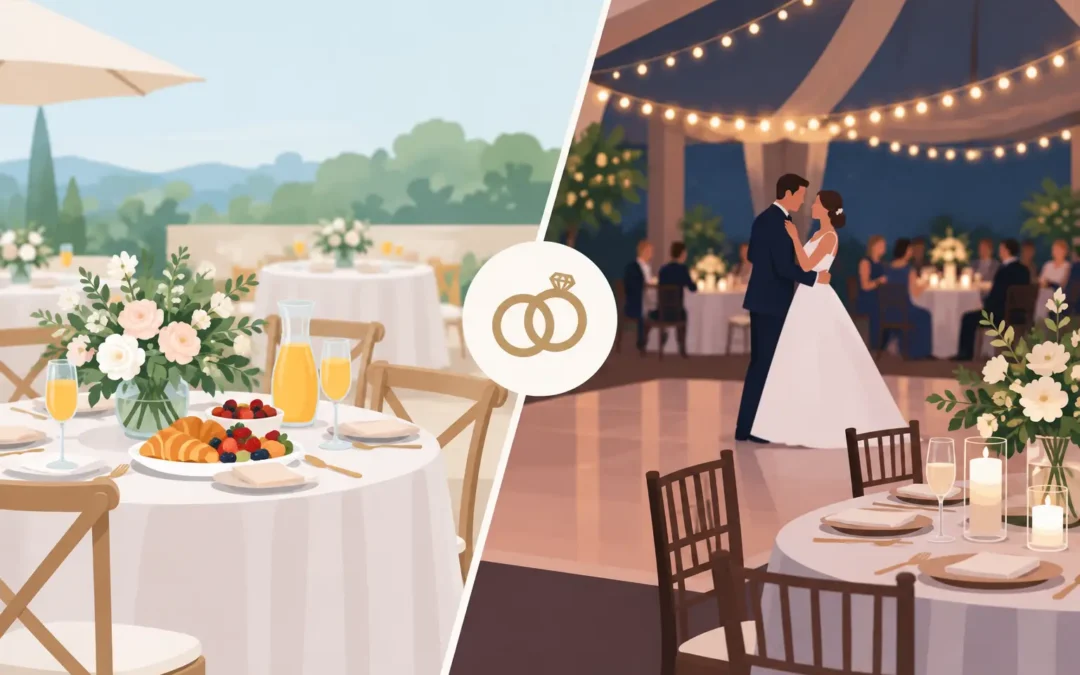
A late-morning celebration can feel especially lovely in Highlands: mountain light through the windows, coffee poured for family, and an unhurried afternoon still ahead. Yet when couples consider a wedding brunch versus reception, the decision is about more than the menu. It shapes the pace of the wedding day, the guest list, the budget, and the kind of memories everyone carries home.
For a small destination wedding, either choice can be gracious and deeply personal. The better fit depends on whether you picture your guests lingering over biscuits and champagne or gathering again after sunset for dinner, music, and dancing.
Wedding Brunch Versus Reception: The Essential Difference
A wedding brunch is typically held late morning through early afternoon, often following a morning ceremony. It is naturally bright, relaxed, and somewhat more concise than an evening celebration. Guests may enjoy coffee, pastries, fruit, eggs, shrimp and grits, or a refined buffet, perhaps with mimosas and a sparkling-wine toast. The mood is sociable rather than formal, making brunch well suited to an intimate wedding weekend.
A traditional reception usually follows an afternoon or evening ceremony. It leaves room for cocktails, a seated dinner or generous buffet, toasts, a first dance, and a fuller evening of celebration. For couples who have long imagined a candlelit dining room, a band or lively playlist, and a dance floor that stays full until the last song, the reception remains the classic choice.
Neither is inherently more elegant. A beautifully hosted brunch can feel every bit as considered as a formal dinner, while a small evening reception can be warm and easygoing. The distinction is largely one of rhythm: brunch invites guests to enjoy the daylight, while a reception makes an occasion of the night.
Choose the Feeling You Want Guests to Remember
A brunch wedding has an immediate sense of ease. Guests arrive fresh, enjoy a celebratory meal, and have the remainder of the day to explore downtown Highlands, browse Main Street shops, take a scenic drive, or simply rest before a weekend dinner. This is a meaningful advantage for a destination gathering, particularly when guests have traveled for the occasion and want time to enjoy the mountains.
Brunch also works beautifully for couples who prefer conversation over a late-night party. Parents, grandparents, and young children often appreciate daytime timing. The daylight lends itself to garden-inspired flowers, antique china, soft linens, and photographs that feel natural and luminous. A shorter event does not need to feel slight when the details are thoughtful.
An evening reception creates a different sort of anticipation. There is time for guests to dress for the occasion, settle into the ceremony, enjoy cocktails, and stay through dinner and dancing. The evening can feel more ceremonial, especially for a larger family gathering or a couple who wants traditional moments to unfold at a leisurely pace.
Historic surroundings are particularly handsome after dark. Candlelight, flowers, polished glassware, and music can give a reception the sense of a grand family occasion, even with a modest guest count. At a place such as Highlands Inn, preserved character and downtown convenience make an intimate wedding weekend feel rooted in the history of the town rather than staged in a generic event room.
Consider the Budget Beyond the Meal
Brunch is often perceived as the lower-cost option, and it can be. Breakfast and lunch menus may be less expensive than a multi-course dinner, and a daytime gathering generally calls for less alcohol than a full evening bar. Couples may also need fewer hours of entertainment, photography, florals, and venue time.
Those savings are real, but they are not automatic. A champagne-forward brunch with made-to-order stations, specialty coffee, elaborate floral installations, and a long guest list can become a substantial event. The most useful question is not whether brunch is inexpensive, but where you want to place your priorities.
A reception often carries higher food-and-beverage expectations. Dinner service, cocktails, dessert, and a longer bar package can add up quickly, as can music and additional rentals. In return, guests are likely to spend more time at the celebration, and many couples feel that a long evening better justifies inviting relatives and friends from farther away.
If budget is central to the decision, consider a middle path. Host a late-afternoon ceremony followed by a sophisticated cocktail reception with substantial hors d’oeuvres, or plan a brunch with a short, polished program and a meaningful toast. A celebration does not have to follow every customary hour to feel complete.
Food and Drinks Set the Tone
The menu is one of the clearest expressions of the wedding’s personality. Brunch offers a wide range of Southern possibilities: buttery biscuits, seasonal fruit, country ham, egg dishes, grits, local trout, and desserts that feel light rather than overly formal. A well-chosen menu can be indulgent without being heavy, and coffee service becomes part of the hospitality rather than an afterthought.
Drinks at brunch deserve the same care as dinner cocktails. Mimosas, Bloody Marys, sparkling water, fresh juices, and a thoughtful coffee bar keep the mood festive. Because the event begins earlier, guests tend to drink more moderately, which may be ideal for a wedding party planning an afternoon outdoors or a family gathering with several generations present.
An evening reception invites a broader dinner menu and more dramatic service. A plated meal can create a traditional, composed experience, while stations or a buffet encourage mingling. Cocktails, wine, and a signature drink can become part of the evening’s story, especially when the celebration includes dancing.
Keep guest comfort in mind. In the mountains, weather and travel schedules matter. A rich brunch may not suit a very early ceremony, and a late dinner can be tiring for guests who have driven winding roads or spent the day exploring. Good hosting is often as simple as serving a satisfying meal at the hour people are truly ready to enjoy it.
Timing Matters More at a Destination Wedding
Highlands is a place guests come to savor. They may extend their stay for hiking, waterfalls, golf, world-class restaurants, or a quiet walk through town. A brunch wedding gives them freedom on the wedding day itself, which can be especially appealing for a smaller group staying nearby.
It also requires an earlier start for everyone involved. Hair, makeup, floral delivery, photography, and the ceremony must be carefully timed. A 10:30 a.m. ceremony may mean a wedding party begins getting ready before sunrise. Couples who love a calm, unhurried morning should be honest about whether that schedule supports the experience they want.
An evening reception allows more preparation time, but it can create a long gap between getting ready and the ceremony. Guests staying in town may appreciate free time, yet out-of-town family members can need clear guidance about where to go and what to do. Welcome notes, a simple weekend itinerary, and nearby gathering suggestions make the day feel considerate rather than fragmented.
Season also plays a role. Spring and fall brunches take advantage of gentle daytime temperatures and mountain color, though weather should always have a thoughtful indoor plan. Summer evenings can be wonderfully cool in Highlands compared with lower elevations. Winter celebrations often favor dinner, candlelight, and the cozy formality of an evening reception.
Let Your Guest List Guide the Decision
Brunch often feels most natural with an intimate guest list: immediate family, closest friends, and the people who will spend a full weekend together. Its relaxed format makes genuine conversation possible. If your greatest wish is to greet every guest, share a meal, and leave time for a private afternoon together, brunch is a lovely answer.
A traditional reception may better serve a larger group or a wide circle of family and friends. It offers a familiar structure, so guests understand the flow without much explanation. It also gives the couple more space for cherished rituals, from formal toasts and dances to a cake cutting late in the evening.
There is room for personal preference, too. Some couples dislike being the center of a dance floor and would rather host a beautiful meal. Others cannot imagine celebrating without music, laughter, and a room full of loved ones staying late. Tradition should support your hospitality, not overrule your own sense of joy.
A Celebration Should Fit the Weekend You Are Creating
The finest choice is the one that feels at home with your wedding’s setting, your guests, and your relationship. Choose brunch if you want daylight, easy conversation, a relaxed Southern table, and room for a full Highlands afternoon. Choose a reception if you want the ceremony to build toward dinner, dancing, and the glow of a memorable evening.
Whatever hour you choose, give your guests a reason to slow down. A warm welcome, a beautiful meal, and time together in a place with character will always matter more than following a prescribed schedule.


