
A memorable banquet is not defined by the number of chairs in the room. It is defined by the feeling that every guest has been considered. When considering how to host an intimate banquet, begin with that standard: a gathering where conversation is easy, the table feels generous, and the setting carries a sense of occasion without becoming overly formal.
In Highlands, North Carolina, the mountain air, walkable Main Street, and enduring character of the town naturally lend themselves to celebrations with warmth and distinction. Whether you are planning a wedding dinner, anniversary supper, family reunion, business gathering, or a long-overdue evening with dear friends, an intimate banquet offers the rare luxury of time well spent together.
Begin With the Purpose of the Evening
Before selecting linens, menus, or flowers, decide what you want guests to remember. A rehearsal dinner has a different rhythm than a retirement celebration. A small wedding reception may call for candlelight and a toast, while a business banquet may be best served by comfortable seating, unhurried service, and enough quiet for meaningful conversation.
This purpose should guide every later decision. If the evening is about honoring family history, include a few framed photographs, a favorite recipe, or a short welcome that tells the story. If it is a gathering of friends, place the emphasis on a gracious table and a meal that encourages everyone to linger. The strongest events feel personal because their details have a reason for being there.
An intimate banquet generally works best when the guest count allows hosts to greet everyone personally. There is no universal number, since the room and service style matter, but gatherings of 12 to 40 guests often strike a pleasing balance. At this size, the table still feels lively, yet no one disappears into the crowd.
Choose a Setting With Character
A beautiful setting does much of the work before the first course arrives. Rather than competing with elaborate decorations, choose a venue with architectural character, comfortable proportions, and a natural sense of welcome. Historic spaces are especially well suited to smaller banquets because they offer texture, atmosphere, and a story that cannot be replicated by a generic ballroom.
At Highlands Inn, Highlands’ first hotel and a property listed on the National Register of Historic Places, an intimate gathering becomes part of a longer tradition of mountain hospitality. Antique interiors and late-19th-century character provide a refined backdrop for dinners and celebrations, while the downtown location makes it easy for guests to walk to shops, world class restaurants, and nearby points of interest before or after the event.
Consider the practical qualities as carefully as the atmosphere. Ask how the space will feel once tables, serving areas, and guests are in place. A room that appears spacious when empty can become crowded after a banquet is set, while a very large room may make a small party feel scattered. The right room should allow for movement without sacrificing the closeness that makes an intimate occasion special.
Let the Season Shape the Experience
Highlands offers a distinct sense of season, and your banquet can reflect it. Spring gatherings may welcome fresh greenery and lighter courses. Summer calls for bright produce, cool drinks, and time on a porch or terrace when available. Autumn lends itself to deeper colors, warm lighting, and menus with a little more richness. Winter celebrations can be wonderfully elegant with evergreens, candlelight, and a fireside feeling.
Seasonal choices do not require a themed event. A few thoughtful touches are enough. Choose flowers and foliage that look at home in the mountains, use a menu that suits the weather, and let the natural beauty of the setting remain the central decoration.
Plan the Table for Conversation
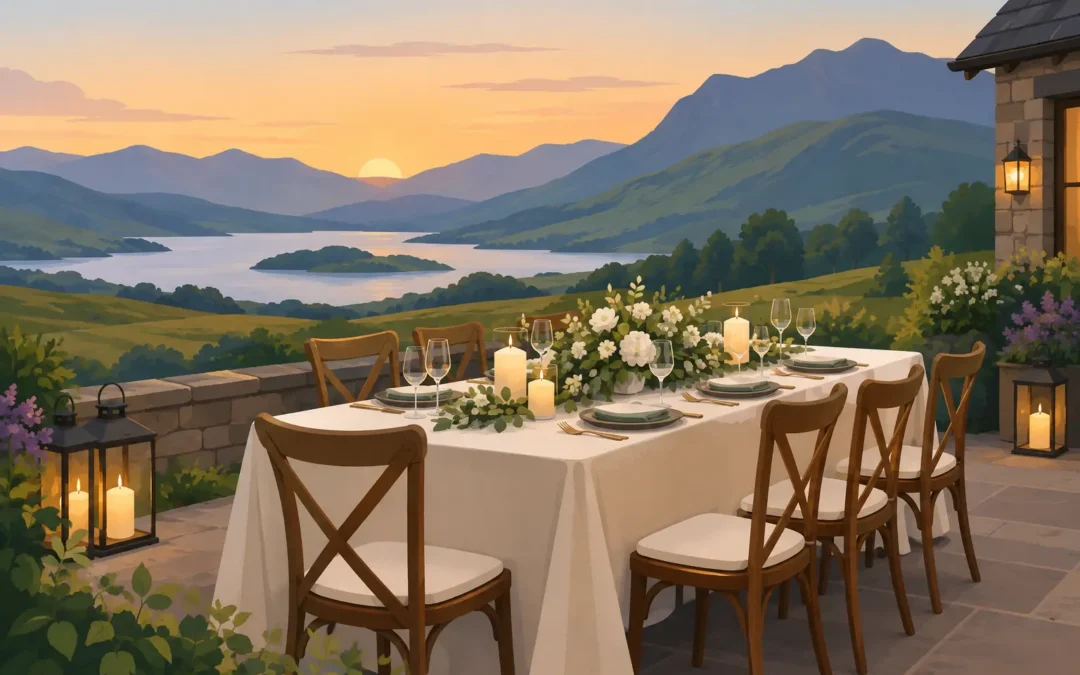
The table is the heart of an intimate banquet. Long rectangular tables create a communal, family-style mood, while round tables make conversation across the table especially easy. One long table can be striking for a small wedding supper or anniversary dinner, but it is not always the best choice for every group. If guests do not know one another well, two or three smaller tables may feel more comfortable and give hosts a better chance to mix the seating thoughtfully.
Avoid filling the center of the table with arrangements so tall that guests must lean around them to speak. Low floral pieces, votives, tapers, and seasonal greenery create a lovely effect while preserving sightlines. Candlelight is especially flattering in the evening, though it should be used with care around floral materials and within venue guidelines.
Place cards are useful even for a relaxed dinner. They spare guests the uncertainty of choosing a seat and allow you to place natural conversationalists together. Alternate personalities where possible, and avoid creating a table of strangers at one end and old friends at the other. Couples need not always sit side by side, particularly at a more social gathering, but the choice should match the comfort level of your guests.
Build a Menu That Feels Generous, Not Complicated
An intimate banquet menu should be memorable without making the evening feel like a production. A plated dinner feels polished and provides a pleasing sense of occasion. Family-style service encourages sharing and can make a group feel immediately at ease. A buffet can work well for a casual celebration, although it may interrupt the flow of conversation as guests leave the table in turns.
The best service style depends on the purpose of the evening and the needs of your guests. For a formal toast or a program with speeches, plated service offers structure. For a reunion or relaxed dinner party, shared platters can create a warmer, more natural rhythm.
Keep the menu focused. A thoughtful selection of hors d’oeuvres, one or two entrée options, seasonal sides, and a well-made dessert is more elegant than an overwhelming number of choices. Make dietary accommodations easy and discreet by gathering preferences in advance. A guest with allergies or dietary restrictions should feel fully included, never like an afterthought.
Beverages deserve the same care. Offer a welcome drink if it suits the occasion, along with attentive nonalcoholic choices. Wine can complement a seated meal beautifully, but a successful banquet does not depend on alcohol. Mountain spring water, sparkling drinks, and a considered coffee or tea service help the evening feel complete.
Give the Evening a Gentle Rhythm
The difference between a pleasant dinner and a truly gracious banquet is often pacing. Leave room for guests to arrive, settle in, and greet one another before dinner begins. A rushed transition from welcome to seating can make even a beautiful event feel hurried.
If there will be toasts, keep them sincere and brief. One heartfelt welcome from the host, followed by a few selected remarks, will have more impact than a long series of speeches. Plan these moments with the meal service in mind. Guests are most attentive before the entrée or shortly after it arrives, not when servers are clearing plates or everyone is ready for dessert.
Music should support conversation rather than dominate it. A softly curated playlist or a subtle acoustic performance can add romance and warmth, but volume matters. If guests must raise their voices to be heard, the music has become the event instead of the accompaniment.
Leave Space for the Unplanned Moments
Not every meaningful moment belongs on a timeline. A grandparent telling a story, friends lingering over coffee, or a couple stepping outside for a breath of cool mountain air may become the memory guests carry home. Build enough structure to make everyone comfortable, then leave the evening room to unfold.
This is also why an intimate banquet benefits from a single point person. It may be an event coordinator, venue representative, or trusted member of the family. That person can guide timing, answer small questions, and handle practical details so the host is free to welcome guests rather than manage logistics.
Make the Gathering Part of a Highlands Stay
For visitors, a banquet in Highlands can become the centerpiece of an entire mountain getaway. Invite guests to arrive early enough to explore downtown, browse local shops, enjoy the town’s dining scene, or spend time outdoors among the Blue Ridge Mountains. Couples and families often appreciate a celebration that includes both a beautiful evening and time to enjoy the destination together.
For wedding parties, this may mean a relaxed rehearsal dinner followed by a walk along Main Street. For a family gathering, it may mean planning a morning hike or scenic drive before an evening meal. The banquet becomes more meaningful when it is not treated as an isolated event, but as part of a shared stay in a place with genuine character.
A successful intimate banquet does not need excess. It needs a welcoming room, a considered table, good food, and the kind of attentive hospitality that allows guests to feel at home. Set the stage with care, then let the people around the table give the evening its lasting meaning.