
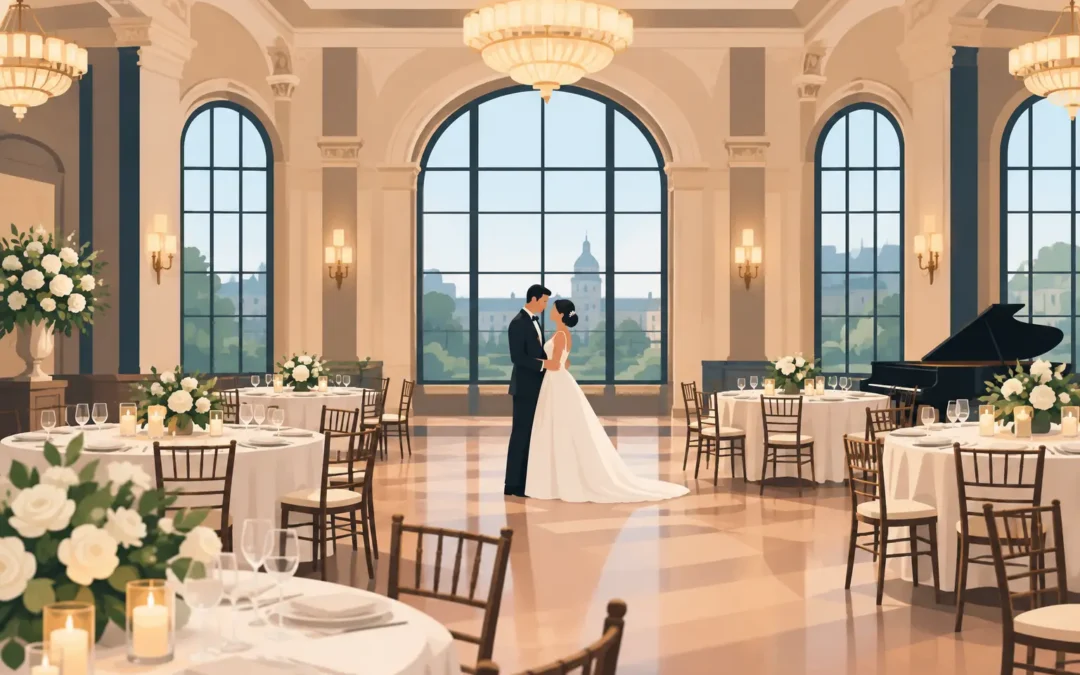
A memorable reception does not need a cavernous ballroom or a guest list in the hundreds. This historic hotel wedding reception example begins with a more personal picture: newlyweds step from a mountain ceremony into the warm glow of a downtown inn, where their closest family and friends are already gathering for an evening of gracious Southern hospitality.
For couples planning a Highlands celebration, a historic hotel creates more than a backdrop for dinner and dancing. It gives the occasion a sense of permanence. Antique details, preserved architecture, and the gentle rhythm of a small mountain town invite guests to slow down, settle in, and share the weekend rather than simply attend one event.
A Historic Hotel Wedding Reception Example in Highlands
Imagine a reception for 35 guests in early autumn. The ceremony has just ended, and the temperature carries that crisp Blue Ridge Mountain edge that calls for a wrap after sunset. Guests stroll along Main Street, passing shops and world class restaurants before arriving at an inn whose character feels collected over generations rather than installed overnight.
Cocktails begin with a welcome drink and light conversation in a setting dressed simply with seasonal flowers, candlelight, and ivory linens. Rather than competing with the building’s historic details, the couple chooses decor that complements them: garden roses, soft greenery, brass accents, handwritten place cards, and a classic ivory cake.
Dinner follows at one long communal table or several intimate tables, depending on the room arrangement and the desired atmosphere. A plated meal may feel appropriately formal for a small reception, while a family-style menu encourages conversation and can make a gathering feel especially generous. Neither choice is automatically better. A plated dinner lends structure to the evening; family-style service brings a relaxed, shared-table feeling that many destination wedding guests appreciate.
After dinner, toasts are kept warm and unhurried. The newlyweds share their first dance, then invite everyone to join them. With a smaller guest count, the dance floor need not be crowded to feel joyful. A carefully chosen playlist, a favorite local musician, or a small acoustic ensemble can suit the scale far better than entertainment designed for a large convention hall.
The evening closes with coffee, dessert, and a final walk beneath the mountain night. Guests who are staying at the inn can retire upstairs rather than arranging transportation at the end of the celebration. That simple convenience is one of the quiet luxuries of a hotel reception.
Start With the Guest Experience
The best historic hotel receptions are designed around how the weekend will feel from a guest’s point of view. Highlands is a destination where people come to enjoy cool mountain air, scenic drives, fine dining, shopping, and time together. A wedding itinerary should leave room for that experience.
Make the Stay Part of the Celebration
A hotel reception is particularly appealing when guests can make a weekend of it. They can arrive the day before for a rehearsal dinner, wake slowly on the wedding morning, and gather again for a farewell breakfast before exploring downtown or heading home. For families and longtime friends who rarely see one another, those unscheduled hours often become the moments they remember most.
At Highlands Inn, Highlands’ first hotel and a property listed on the National Register of Historic Places, the setting carries its own story. Its 31 rooms make it well suited to couples seeking a smaller, more connected wedding weekend rather than a large, anonymous event. Room availability, event capacity, and the season will shape the final plan, so early inquiries are especially wise for popular mountain weekends.
Keep the Guest List True to the Setting
Historic inns tend to shine with intimate celebrations. A guest list of 20 to 50 people allows hosts to greet everyone, gives each table a sense of connection, and makes the occasion feel less like a production. This does not mean a small reception must feel modest. It can still include a beautiful meal, live music, a champagne toast, and all the ceremony a couple desires.
The trade-off is that couples planning a very large dance party may need a different venue format or an additional event space. Knowing that early helps protect the experience. A historic hotel is at its best when the reception feels at home in the property, not forced to outgrow it.
Let the Building Set the Style
When a venue has authentic late-19th-century character, it does much of the visual work already. Couples can spend less on oversized installations and more on details that feel personal: meaningful menu cards, heirloom photographs, a signature cocktail, or a guest book that will become part of the home’s history.
A refined palette usually photographs beautifully in historic interiors. Soft white, cream, sage, dusty blue, warm gold, and deep burgundy all work well with antique furnishings and natural wood tones. For a winter reception, evergreen, velvet ribbon, and candlelight create a rich, traditional look. In spring and summer, lighter florals and garden-inspired arrangements keep the mood fresh without losing the inn’s sense of heritage.
Lighting deserves special attention. Candles, lamps, and low, warm lighting flatter both historic spaces and evening portraits. Before selecting any decor, couples should ask what is permitted and whether flame-free candles are preferred. A thoughtful planner or florist can create a beautiful effect while respecting the care an older building requires.
Give the Evening Room to Breathe
A mountain wedding reception benefits from a comfortable pace. Trying to fit every tradition into a short window can leave guests feeling rushed, particularly if they have traveled several hours to reach Highlands.
Plan for a cocktail hour that genuinely lasts long enough for family photos and conversation. Then move into dinner, toasts, and dancing in an order that feels natural to the couple. If a first dance matters deeply, place it where everyone can enjoy it. If the couple would rather spend more time visiting tables, keep formal moments brief and allow the evening to unfold around the meal.
Season also matters. In summer, afternoon showers are possible, while fall weekends can bring heavier visitor traffic and cooler temperatures after dark. Winter offers a quieter, more intimate mountain mood, but guests should be reminded to pack for changing weather. A good reception plan has a graceful indoor alternative for every outdoor hope.
Add Highlands Flavor Without Overplanning
A destination wedding should reflect its location, but it does not need to become a mountain-theme production. The most elegant approach is often subtle. Welcome bags might include local treats, a printed guide to favorite downtown stops, or a note suggesting a waterfall drive for guests staying an extra day.
For the reception menu, consider seasonal ingredients and familiar Southern comforts presented with care. A rehearsal dinner might be more casual, leaving the wedding reception for a celebratory meal with thoughtful wine pairings and a traditional cake. Or reverse the mood: host a formal rehearsal dinner and make the reception feel like a lively supper party. The right choice depends on the couple’s personality and how much time they want with each guest.
A farewell gathering the next morning can be wonderfully simple. Coffee, pastries, and shared stories are enough. It offers a gentle final chapter to a weekend that has already given friends and family a reason to linger.
Questions to Settle Before You Reserve
Before choosing a historic hotel reception venue, ask about guest capacity for the preferred meal style, available dates, lodging options for the wedding party, noise considerations, vendor policies, and weather plans. Also discuss the timing of setup and breakdown, especially if floral installations, musicians, or rental pieces are involved.
It is wise to be clear about priorities from the beginning. If an intimate dinner in a historic setting matters more than a late-night dance floor, an inn reception may be exactly right. If a large band and 150 guests are nonnegotiable, the couple may need to pair the inn stay with a larger nearby event plan. There is no wrong preference, only the value of choosing a setting that supports it well.
A historic hotel reception becomes unforgettable when it feels as though it could only have happened there: close friends around the table, mountain air at the door, and a beloved old inn holding the evening’s first stories for years to come.